













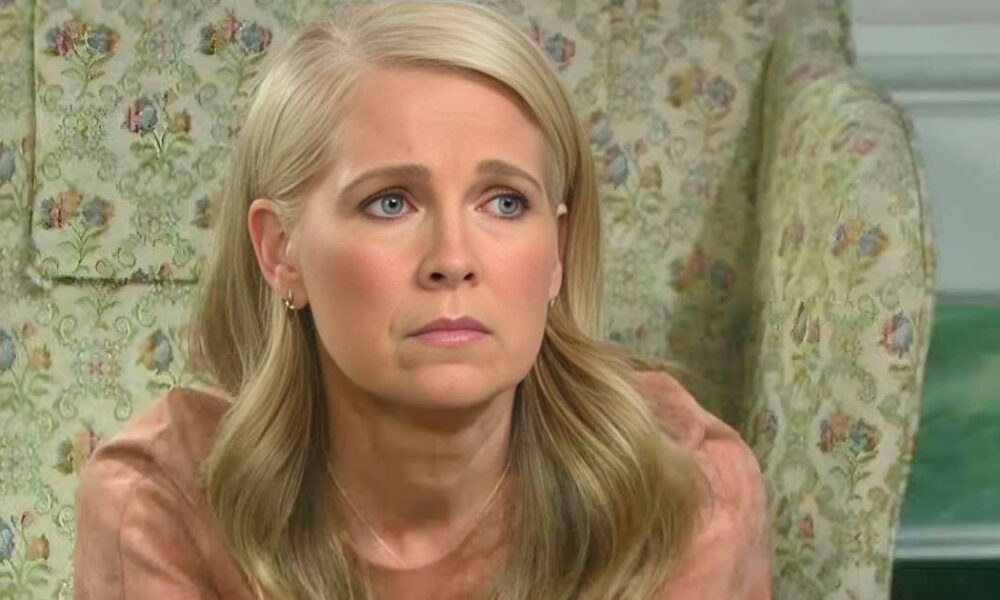

The quiet streets of Salem are anything but serene as Jennifer Deveraux escalates what could become the most emotionally charged and unprecedented custody battle in the history of daytime television. Driven by an overwhelming grief for her deceased daughter, Abigail DiMera, Jennifer is reportedly threatening legal action against Chad DiMera, Abigail’s widower, for custody of their children, Thomas and Charlotte. Her shocking claim? That she can provide a superior home for the children than their own father. This isn’t just a conventional family dispute; it’s a dramatic saga brimming with accusation, heartbreak, and a speculative twist so wild it could redefine soap opera madness.
The Unfolding Custody Crisis: Jennifer’s Desperate Bid for Thomas and Charlotte
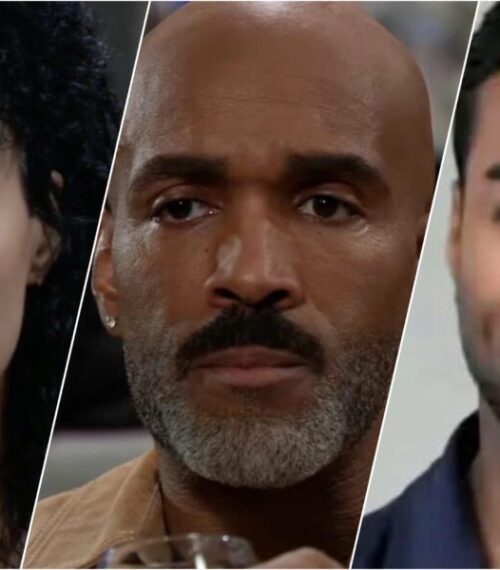
Jennifer Deveraux has reportedly declared war on Chad DiMera, threatening to pull Thomas and Charlotte from their father’s care and relocate them to Boston. Her primary grievance stems from Chad’s burgeoning relationship with Cat Greene, whom Jennifer views as an unacceptable presence in the children’s lives. According to Jennifer, Chad’s new relationship signifies an attempt to ‘replace’ Abigail, suggesting he’s neglecting his duties as a father.
The catalyst for Jennifer’s accusations appears to be a terrifying incident where young Thomas nearly ran into traffic. While undoubtedly a harrowing moment for any parent, Jennifer is reportedly using this singular event to build a case for Chad’s parental negligence, aiming to dismantle his family unit. However, the true depth of Jennifer’s objections runs deeper, intertwined with the complex history involving Cat Greene.
Jennifer’s Grievous Spiral: Accusations Amidst Hypocrisy
It’s crucial to contextualize Jennifer’s current crusade within Salem’s dramatic landscape. Cat Greene, the woman Chad is reportedly seeing, famously impersonated Abigail DiMera, exploiting Chad’s profound grief to defraud him. This deeply manipulative act nearly shattered Chad emotionally and financially. Yet, Jennifer, acutely aware of Cat’s deceit, is now ironically accusing Chad of trying to ‘replace’ Abigail by entertaining any relationship with this woman.
This striking hypocrisy suggests a painful reality: Jennifer herself may be projecting her own inability to let go of Abigail. Her actions hint at a desperation so profound that she might be attempting to ‘replace’ Abigail herself by taking over the parenting of her children. The narrative suggests Jennifer is so consumed by her sorrow that her judgment has become severely skewed. With Mike Horton, her brother, reportedly returning to Salem to support her, Jennifer appears fortified for what promises to be an arduous and bitter legal showdown.
[IMG1]
The Unthinkable Theory: Decades-Old Frozen Embryos as a Custody Weapon
Prepare for a twist that could send shockwaves through Salem and beyond: what if Jennifer and Jack Deveraux possess frozen embryos from decades past, unknown to almost everyone? This isn’t as far-fetched as it sounds within the world of ‘Days of Our Lives.’
Jennifer and Jack, a couple whose history spans from the late 1980s, have endured countless soap opera staples: multiple marriages, presumed deaths, miraculous resurrections, kidnappings, and international espionage. Their tumultuous journey through life saw the birth of Abigail in 1992 and J.J. Deveraux in 2004, amidst one of Jack’s many ‘presumed dead’ periods. It’s plausible that somewhere within this chaotic timeline, Jack and Jennifer, perhaps during one of Jack’s brushes with mortality, might have created and preserved embryos as a ‘just in case’ measure.
The concept of frozen embryos is practically a recurring character in soap operas. Remember the storylines involving Stefan DiMera and Gabi Hernandez’s embryos, or the dramatic twists surrounding Bo and Hope Brady’s embryo saga? This well-established trope provides a fertile ground for Jennifer’s grief-fueled mania to reach an unprecedented level. The theory posits that Jennifer Deveraux, in her current emotionally volatile state, might decide to implant one of these decades-old frozen embryos to conceive a child with Jack.
A Desperate Bid for ‘Replacement’: Unpacking Jennifer’s Extreme Motivation
Why would Jennifer embark on such an extreme, emotionally complex path? The answer, disturbingly simple within the context of her grief, is to definitively ‘win’ the custody battle and, in her mind, ‘replace’ Abigail. Jennifer’s primary argument against Chad is his supposed inability to replicate the family unit Abigail provided. She is incensed by his relationship with Cat, a woman who notoriously masqueraded as Abigail, perceiving this as Chad’s attempt to erase her daughter’s memory.
However, this theory suggests Jennifer is inadvertently projecting. Her deep-seated grief and desperate yearning for Abigail’s presence could lead her to seek another child, one she might convince herself is Abigail reincarnated. Imagine the scene: Jennifer Deveraux, visibly pregnant, appearing at the custody hearing nine months along. Her legal team could argue that she is establishing a ‘stable, loving home’ for Thomas and Charlotte by providing them with a new aunt or uncle, portraying her actions as creating a more complete family environment than Chad currently offers.
Should the child be a girl, the situation could escalate further. Jennifer might genuinely attempt to name the baby Abigail, claiming it’s her daughter’s spirit returning, using the pregnancy as a dramatic ‘proof’ that Abigail herself desires Jennifer to raise her children. This scenario is not only twisted and manipulative but perfectly encapsulates the kind of extreme behavior that profound grief can provoke in a soap opera character.
[IMG2]
Jack’s Impossible Dilemma: Love, Loyalty, and Legal Powerlessness
In this dramatic hypothetical, Jack Deveraux would find himself in an unenviable, truly soap-operatic predicament: horrified by Jennifer’s plan yet legally impotent to stop her from using their shared embryos. Jack, currently alive and well in Salem, undoubtedly loves Jennifer. However, he also possesses a keen understanding of her emotional fragility and propensity to spiral under duress. He would likely immediately recognize the inherent madness in conceiving a child to leverage a custody battle.
The critical issue lies in legal precedent: if these embryos contain both Jack and Jennifer’s genetic material, Jennifer would likely have an equal right to use them. Barring any specific, pre-existing legal agreement regarding their disposition, Jennifer could potentially proceed with implantation without Jack’s explicit permission. This leaves Jack in an agonizing bind, watching the love of his life descend into grief-fueled irrationality while carrying his child.
His dilemma would be profound: torn between his unwavering love and desire to support Jennifer, and his urgent need to inject reason into her profoundly unhealthy decision. All the while, Chad would be left reeling from the revelation that his mother-in-law is weaponizing a pregnancy in a legal dispute. Envision Jack attempting to explain to a perplexed judge, ‘Your Honor, I don’t endorse my wife’s use of our embryos, but legally, she has every right to do so.’ Such a scene would be the epitome of Salem’s unparalleled chaos.
Chad’s Unforeseen Challenge: The Pregnancy Bombshell in Court
Chad DiMera has already navigated a gauntlet of trauma: the brutal murder of his wife Abigail, falling victim to a scammer impersonating her, and the terrifying near-accident involving his son. Now, his mother-in-law threatens to snatch his children away. But imagine Chad’s reaction if Jennifer Deveraux were to appear at a custody hearing visibly pregnant, perhaps six months along, asserting that her pregnancy guarantees a ‘complete family’ for Thomas and Charlotte.
Chad would likely be rendered speechless. His legal counsel would undoubtedly argue that Jennifer is cynically using a baby as a legal prop, a point that is undeniably true. However, Jennifer’s lawyer could counter, positing that she is offering stability, an expanded family structure, and a sibling figure to aid the children in healing from their mother’s loss. The courtroom drama would reach legendary proportions.
Picture the judge’s bewildered expression as lawyers debate whether a woman in her fifties undertaking a geriatric pregnancy with decades-old frozen embryos constitutes a ‘stable home environment.’ And if Jennifer were to genuinely claim the baby is Abigail reincarnated? Chad might justifiably request a psychiatric evaluation, a move that could ironically backfire, painting him as heartlessly attacking a grieving grandmother.
Escalation to Unprecedented Levels: Salem’s Legal Battle Rages
If Jennifer indeed proceeds with this extraordinary pregnancy plan on ‘Days of Our Lives,’ the custody battle would transcend anything Salem has previously witnessed. Legal experts would grapple with highly complex and ethically fraught issues: frozen embryo rights, the implications of geriatric pregnancies, intricate parental rights, grandparents’ rights, and, crucially, whether Jennifer’s mental state renders her unfit to raise Thomas and Charlotte—a stark reversal, given she initiated the custody proceedings.
Mike Horton would likely make valiant efforts to reason with his sister, but Jennifer would remain steadfast in her conviction that she is acting in the children’s best interest. Jack would remain deeply conflicted, torn between his unwavering affection and his recognition of her profoundly misguided decision. And what of J.J. Deveraux? His reaction to his mother’s pregnancy with a sibling conceived from decades-old embryos would be monumental. Would he view his mother as having lost her way, or would his own grief for Abigail lead him to support her, perhaps clinging to the belief that this child could somehow bring his sister’s essence back?
This scenario would splinter the entire Horton family, while the DiMeras would observe the unfolding spectacle with a horrified fascination. Salem would be gripped by this unprecedented saga for months on end.
The Enduring Aftermath: A Child Born into Chaos
Should Jennifer’s plan materialize, and she carries the baby to term, the ramifications would be extensive and permanent. Jennifer would face the challenges of raising a newborn in her fifties, while Jack would once again become an elderly father. Thomas and Charlotte would acquire an aunt or uncle younger than themselves, a circumstance demanding significant therapeutic support in their future.
The emotional weight would be immense, particularly if Jennifer were to name the baby Abigail, genuinely believing the child is her daughter reincarnated. This child would grow up under the shadow of being a ‘replacement child’ for a murdered mother, a psychologically damaging burden. Furthermore, the impact on the custody case itself is uncertain. Would a pregnant Jennifer’s victory somehow ‘prove’ she was the superior parent? Or would the pregnancy backfire, convincing the judge that Jennifer is too emotionally unstable to care for any child, including her own?
The long-term narrative potential of such a storyline is boundless—and deeply complex, which is precisely why it aligns perfectly with the dramatic essence of soap opera television.
A Masterstroke for Soap Opera Storytelling
From a soap opera writing perspective, this storyline represents pure genius. It would force Jennifer, long considered the ‘good girl’ Deveraux and the moral compass of her family, into morally ambiguous territory. Witnessing her profound character arc would offer a compelling exploration of grief and obsession.
It would place Jack in an impossible bind: either support his wife despite her clear misjudgment or risk shattering their marriage by siding with Chad. This creates a custody battle unlike any seen before, where both parties present legitimate arguments and evoke genuine sympathy. Thomas and Charlotte would inherit deeply complex emotional storylines, caught between their father and grandmother’s escalating conflict. Moreover, the narrative would naturally provoke genuine ethical questions surrounding reproductive rights, the use of frozen embryos, the profound nature of grief, and the distinctions between parenthood and guardianship.
Crucially, if the baby were born, the show would have years of material exploring how that child navigates life in Abigail’s indelible shadow, and whether Jennifer ultimately confronts the profound implications of her actions.
Why This Theory Resonates with Days of Our Lives Lore
Let’s be candid: this extreme storyline fits seamlessly into the ‘Days of Our Lives’ universe. A grandmother, consumed by grief, using frozen embryos to conceive a child and win a custody battle? For Salem, this is merely another Tuesday. This is a show renowned for its audacious plots: characters possessed by the devil (multiple times), abducted to remote islands, subjected to brainwashing, and resurrected from the dead so frequently that death itself feels like a temporary inconvenience.
A geriatric pregnancy using decades-old embryos as a custody weapon barely cracks the top twenty most insane storylines ‘Days of Our Lives’ has ever produced. Furthermore, it provides a logical, albeit dramatic, escalation of Jennifer’s increasingly erratic behavior. Her current threats, while extreme, are somewhat understandable given her grief. But if the writers aim to truly propel this storyline to an unprecedented level—and it’s highly probable they do—the frozen embryo twist offers the perfect, jaw-dropping progression. It’s the kind of storyline designed to ignite fan conversations, fuel social media debates, and ensure daily viewership.
The Defining Fallout for Salem’s Legacy
Regardless of how the dust settles—whether Jennifer wins or loses custody, whether she ultimately conceives or not—this storyline possesses the power to permanently reshape multiple families within Salem. The Horton family would inevitably face deep divisions, some arguing Jennifer acted to protect Abigail’s children, others contending her actions were a selfish attempt to replace her daughter.
The DiMera family would gain yet another reason to view the Hortons with suspicion, further entrenching the long-standing generational feud between the two prominent clans. Chad would be forced to painstakingly rebuild his life yet again, potentially as a single father who lost custody, or as one fighting to maintain a relationship with his children while they reside in Boston. And Jennifer herself would eventually need to reconcile with the profound lengths to which her grief drove her, assuming she ever fully emerges from her emotional spiral to grasp the magnitude of her decisions. This is the kind of narrative that promises lasting consequences and genuine impact, distinguishing it from countless transient soap opera plots.