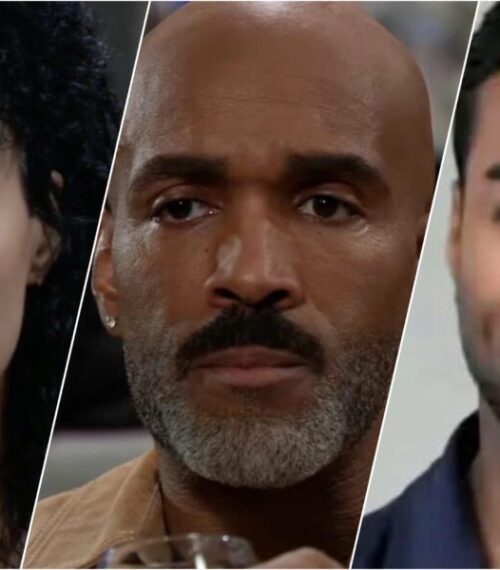














In the vibrant, often tumultuous world of daytime drama, storylines push boundaries, test loyalties, and occasionally, challenge the very fabric of belief. Few current narratives on The Bold and the Beautiful have sparked as much bewildered conversation and outright skepticism as the unfolding saga of Sheila Carter. The notorious villainess, whose rap sheet spans an astonishing three decades of unparalleled mayhem, is now engaging in therapy sessions with Deacon Sharpe. This development, presented by the show as a potential path to redemption, strikes many long-time viewers as not just improbable, but genuinely audacious. Can a character synonymous with pure, unadulterated evil truly find solace and transformation on a therapist’s couch, or are we witnessing the most profoundly ironic, perhaps even unintentionally comedic, chapter in B&B history?
Sheila Carter’s Reign of Terror: A Staggering Rap Sheet
To truly grasp the magnitude of the current storyline, one must first revisit the infamous career of Sheila Carter. For over 30 years, Sheila has carved a bloody, manipulative path through the lives of Los Angeles’s most prominent families, particularly the Forresters. Her list of transgressions reads less like character development and more like a detailed criminal dossier, making it painstakingly clear why fans struggle with the notion of her “reform.”
A History of Unspeakable Acts
Consider her heinous actions: Sheila has shot beloved characters, leaving them for dead — most recently, her own son, Finn, and his wife, Steffy Forrester. Her cruelty knows no bounds, evidenced by her willingness to orchestrate a baby switch, shattering multiple lives in the process. She has held innocent individuals hostage, terrorized entire families for decades, and famously faked her own death not once, but multiple times, always resurfacing to inflict more pain. Her signature move involves infiltrating families, gaining trust, and then unleashing a storm of chaos and violence when her schemes unravel. The woman’s criminal resume is so extensive, it dwarfs the typical list of misdeeds seen on any soap opera.
Given this extensive history of calculated malice and extreme violence, the idea that Sheila Carter is now voluntarily attending standard therapy sessions, let alone with a character like Deacon Sharpe, stretches the boundaries of credulity. The very notion asks viewers to suspend decades of established character development and accept a premise that feels, at best, a desperate attempt at narrative shock value, and at worst, a profound disrespect for the character’s legacy of villainy.
Deacon Sharpe’s Perilous Pact: Navigating a Psychopath’s Psyche
Equally perplexing is the involvement of Deacon Sharpe in Sheila’s supposed journey of self-discovery. Deacon, a character with his own checkered past but who has recently strived for redemption, now finds himself in therapy sessions with a woman who has attempted murder more times than most people have had a challenging day. His apparent willingness to believe in Sheila’s capacity for change is, frankly, alarming.
The Alarming Naiveté of Deacon
Deacon’s perception of Sheila seems remarkably skewed. He appears to view her as someone with “trust issues” or emotional baggage, rather than a clinically diagnosable psychopath who has repeatedly demonstrated an utter disregard for human life. He sits across from her, seemingly absorbing her narrative, despite her history of shooting her own son and leaving him for dead. This isn’t a mere lapse in judgment; it’s an active participation in a delusion that places not only himself but potentially others, in grave danger.
The latest spoilers for The Bold and the Beautiful confirm that Hope Logan is deeply troubled by these ongoing therapy sessions, confiding her anxieties to Steffy Forrester. Hope’s concern is entirely justified. Her father is investing emotional energy and belief in a woman who has consistently proven incapable of genuine remorse or lasting change. To simply dismiss Sheila’s past as “mistakes” that can be rectified through conventional therapy is a dangerous simplification of a deeply complex and disturbed individual.
While Deacon may genuinely wish to see the best in people, especially those he cares for, his current stance regarding Sheila appears to border on willful blindness. How can one sit in a therapeutic setting with a woman who has terrorized one’s daughter’s family, listen to her articulate her feelings, and truly believe that this time, she will be different? Just ask Steffy and Finn about the perils of trusting Sheila Carter. Their near-fatal encounter serves as a stark, bloody reminder of her true nature.
An Unlikely Alliance: Hope and Steffy United Against a Common Threat
Perhaps the most telling aspect of this bizarre narrative is the unexpected alliance forming between Hope Logan and Steffy Forrester. These two women, historically rivals over Liam Spencer, have spent years locked in bitter conflict. Heart-to-heart conversations are not typically their modus operandi. Yet, the sheer absurdity and profound danger of Sheila’s “therapy” storyline have compelled them to unite, a testament to the severity of the situation.
Bridging Divides Over Shared Alarm
Hope’s decision to confide in Steffy about her father Deacon’s involvement with Sheila speaks volumes. It underscores the profound level of concern and alarm felt by those closest to the situation. Hope is rightly worried about Deacon being re-ensnared in Sheila’s manipulative web, and she instinctively turns to the one person who intimately understands the depth of Sheila’s depravity: Steffy, a woman who literally took a bullet from Sheila’s gun. If these two long-standing adversaries can find common ground and shared apprehension, it signals that the threat is not just serious, but universally recognized by the characters who have suffered most at Sheila’s hands.
What exactly is Hope sharing with Steffy? Is Sheila subtly manipulating the therapist, using the sessions as an elaborate excuse to spend more time with Deacon, perhaps even feigning vulnerability to gain sympathy? Is the therapist, unaware of Sheila’s extensive criminal history, falling for her well-practiced act? Sheila Carter is, after all, a master of manipulation, an expert at playing the victim, and highly skilled at twisting narratives to suit her nefarious agenda. The potential for her to weaponize therapy itself is a chilling prospect.
The Inevitable Manipulation: Sheila’s Masterclass in Deception
Let’s be brutally honest about the likely trajectory of these so-called “therapy sessions.” Sheila Carter is not going to genuinely engage in introspection, nor will she honestly confront her decades of horrific behavior. Her modus operandi has always been, and will almost certainly remain, manipulation. She will undoubtedly twist the narrative, portray herself as the aggrieved party, and invent excuses for her violent actions. She will, with calculated precision, gaslight the therapist into believing that everyone else is the source of her problems, and that she is merely a victim of circumstance.
A Familiar Playbook: Gaslighting and Victimhood
This is the essence of Sheila Carter’s character throughout her entire history on The Bold and the Beautiful. She has perfected the art of convincing those around her that she has changed, that her remorse is genuine, and that she deserves another chance. However, the moment people lower their guard, the moment they begin to trust, Sheila inevitably strikes again, her true, malevolent nature resurfacing with devastating consequences. It is her signature move, a predictable yet always terrifying cycle of deception and destruction.
Therefore, it is entirely understandable why long-time viewers of The Bold and the Beautiful find it impossible to believe that a few therapy sessions will magically transform Sheila Carter into a well-adjusted, empathetic human being. Fans have witnessed this narrative play out countless times before. They know how it ends, and it almost invariably concludes with innocent people getting hurt while Sheila artfully maintains her façade of innocence or victimhood.
One can only wonder if Sheila’s therapist is truly aware of the dangerous individual they are dealing with. Perhaps someone should warn them, not just for their own safety, but for the integrity of the therapeutic process itself. This isn’t just about character development; it’s about acknowledging the deep-seated psychopathy that defines Sheila Carter.
What This Means for the Future of B&B Narratives
The decision to place Sheila Carter in a therapeutic setting, ostensibly for genuine character transformation, presents a significant challenge to the credibility and future storytelling of The Bold and the Beautiful. While soap operas thrive on drama and surprising twists, there’s a delicate balance between shocking revelations and outright disregard for established character history. Attempting to rehabilitate a character like Sheila, whose villainy is foundational to her identity, risks alienating a dedicated fanbase who appreciates the consistency of long-standing antagonists.
If Sheila truly “changes,” it diminishes the impact of her past actions and undermines the suffering of her victims. Conversely, if this is merely another one of Sheila’s elaborate manipulations, it continues a repetitive cycle that could bore viewers. The true intrigue lies not in her potential for change, but in how B&B navigates this incredibly thorny narrative. Will the writers truly commit to a rehabilitation arc, or will Sheila revert to type, leaving behind a trail of manipulated therapists and disillusioned characters? The path chosen will significantly influence how viewers perceive not only Sheila Carter but the very nature of redemption within the B&B universe.