














The intricate dynamics within the British Royal Family continue to captivate global audiences, with particular focus on the estranged relationship between Prince Harry, the Duke of Sussex, and his elder brother, Prince William, the Prince of Wales. A compelling narrative has emerged from royal circles, suggesting that the very trajectory of Prince Harry’s future within the royal fold rests squarely in the hands of his brother. This perspective, championed by a notable royal commentator, posits a critical dependency: William’s forgiveness as the sole gateway for Harry’s potential reintegration into the institution he once served with unwavering dedication. This exploration delves into the assertions that illuminate the profound implications of this royal rift and what it means for the Duke of Sussex’s path forward.
The Royal Author’s Incisive Perspective
Renowned royal commentator and author Tina Brown has offered a candid assessment of Prince Harry’s standing, outlining what she perceives as the fundamental condition for his return to the royal family. According to Brown, an influential voice on monarchical affairs, the Duke of Sussex’s path back to a more central role is contingent upon Prince William extending an olive branch of forgiveness. This forgiveness, Brown suggests, must address the series of public revelations and criticisms that Harry has directed towards the royal institution over recent years. [IMG1] This sentiment underscores a deeply personal and institutional betrayal that has reportedly solidified William’s stance, making the prospect of reconciliation a formidable challenge. Brown’s analysis implies that the current chasm between the brothers is not merely a family dispute but a significant factor shaping the future landscape of the monarchy and the roles of its key figures.
A Prince’s Natural Calling: Harry’s Innate Royal Charisma
Adding another layer to this complex narrative, Brown contends that Prince Harry and Meghan Markle, the Duchess of Sussex, may currently find themselves with limited offerings to the global stage. This stark observation is particularly poignant given Brown’s high regard for Harry’s inherent princely qualities. In a recent dialogue with the New York Times, Brown articulated a compelling description of the Duke: “What is sad is that Harry’s very good at being a prince. He’s charming, he’s upbeat, he’s attractive, he makes people happy when he walks into a room, he’s very good with young people. You could send him around the world and he’s always going to be welcomed and appealing.” This portrayal paints a picture of a natural diplomat and public figure, someone intrinsically suited to the demands and duties of royal life. His ability to connect with people, particularly younger generations, made him an invaluable asset to the monarchy, fostering goodwill and strengthening the royal brand globally. This inherent charm and charisma, Brown implies, are qualities that are now underutilized or misdirected in his current ventures.
Beyond the Palace Walls: Harry and Meghan’s Current Trajectory
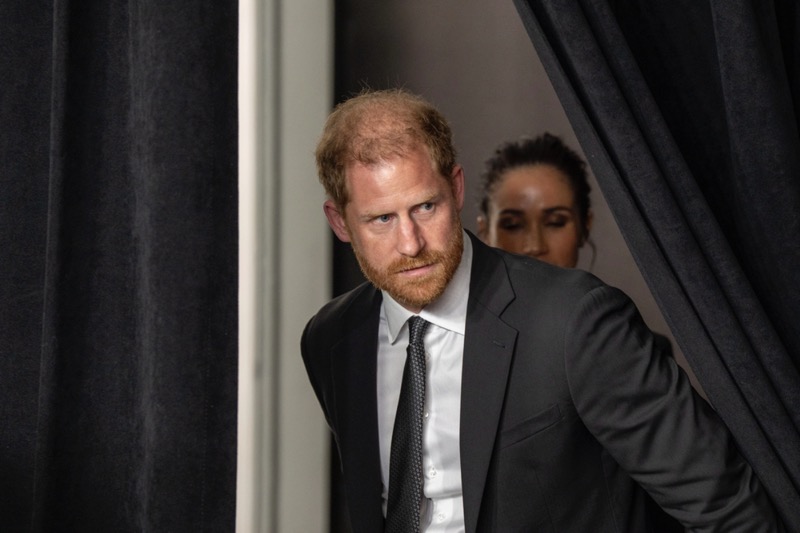
The author further suggests that Prince Harry might be experiencing a belated realization of his true calling. Brown notes, “And I think he has realized too late that he was born to be a prince. And now he’s essentially just some guy doing P.R. gigs while Meghan tries out her latest cooking idea or whatever. It looks more and more as if Harry’s best decision would be to find a way to come back to England.” This assessment paints a rather stark contrast between the significant impact Harry once had as a senior working royal and his present-day professional endeavors. [IMG2] The implication is that without the institutional backing and global platform of the monarchy, the Sussexes’ independent projects, while ambitious, may struggle to achieve the same gravitas or widespread influence. Brown’s perspective highlights a potential growing disparity between the public’s perception of their current roles and the impactful royal service they once provided. The idea of returning to England is presented not just as a geographical shift but as a symbolic step towards reclaiming a purpose that may feel intrinsically linked to his birthright.
Prince William: The Gatekeeper of Reconciliation
The prospect of Prince Harry making amends with his family is, according to Brown, becoming increasingly challenging with each passing year. The weight of this decision, she firmly believes, rests predominantly with Prince William. “I’d like to see a way for him to make amends with his family, but it gets harder and harder as the years go by. I think that William is going to be the decider of that, and I think William has a very tough view of the whole situation, which is that the betrayal of Harry is not something that can be remedied,” Brown asserts. This paints Prince William as not merely an aggrieved brother but as the ultimate arbiter of Harry’s royal future. His “tough view” signifies a deep-seated conviction that the public disclosures and criticisms launched by Harry constitute a breach of trust so profound that it may be beyond repair. This stance from the future King underscores the gravity of the rift, suggesting that the consequences of Harry’s actions are perceived as fundamental to the integrity and stability of the monarchy itself. The question of whether William will ever extend the forgiveness Harry reportedly needs remains a central, unanswered query in the ongoing royal saga.
The Enduring Rift: A Royal Dilemma Unfolding
The question of whether Prince William will ever truly forgive his younger brother, let alone engage with him meaningfully, continues to loom large. The current silence from Prince Harry regarding the myriad criticisms leveled against him and Meghan Markle further complicates matters. While public responses from the Duke of Sussex are often scarce in such situations, the prolonged quietude suggests a deepening impasse rather than an imminent breakthrough. The lack of direct engagement or public statement from Harry only reinforces the perception that the brothers’ relationship remains fractured, with little immediate hope for resolution. This ongoing tension is not just a personal matter between two siblings; it holds broader implications for the image and future direction of the British monarchy. As royal watchers keenly observe developments, the unresolved nature of this fraternal conflict leaves many speculating about the long-term impact on the House of Windsor and its adaptability in a rapidly changing world.
What This Means for the Monarchy’s Modern Era
The narrative surrounding Prince Harry and Prince William is far more than just a family feud; it represents a significant chapter in the ongoing evolution of the British monarchy. Tina Brown’s insights highlight the critical role that personal relationships play within an institutional framework, especially when one brother is destined for the throne and the other has chosen an independent path. The question of forgiveness, of perceived betrayal, and of a prince’s true calling, resonates deeply. It challenges assumptions about duty, freedom, and the enduring power of blood ties in a public sphere. As the future of the monarchy continues to adapt to modern scrutiny and expectations, the resolution, or indeed the lack thereof, in the relationship between these two princes will undoubtedly shape public perception and internal dynamics for years to come. Whether Prince Harry ultimately finds a way back to a more integrated role, or fully embraces a life outside the royal firm, the path forward remains inextricably linked to the complex, and currently strained, bond he shares with his brother, Prince William.