













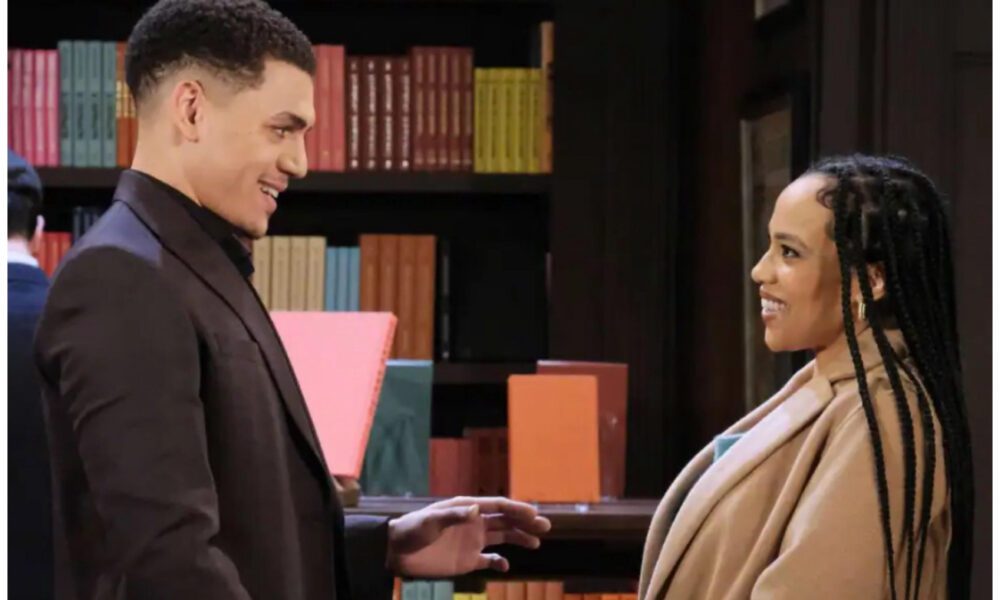

In the vibrant, often tumultuous world of Salem, where dramatic romances are the lifeblood of its narrative, a recent speculative pairing has sent shockwaves of confusion and outright rejection through the Days of Our Lives fanbase: Jada Hunter and Theo Carver. What might appear as a simple attempt to connect two single characters has, for many loyal viewers, crossed an unspoken boundary, stirring an ‘ick factor’ that refuses to subside. This isn’t just a matter of differing opinions on chemistry; it’s a fundamental clash with decades of established history, character development, and the very fabric of Salem’s family dynamics. Fans are vocalizing their collective ‘no,’ prompting a closer look at why this particular coupling would be Salem’s biggest misstep.
[IMG1]
The Unbreakable Kinship: Why Jada and Theo Feel Like Family
Let’s address the elephant in the room: the perceived romantic chemistry between Jada Hunter and Theo Carver is, for many, akin to that of siblings at a family reunion. And there’s a deeply rooted reason for this widespread sentiment that stems from the very foundation of Days of Our Lives lore.
Rewind to the 1980s, and you’ll find the genesis of an extraordinary bond: the brotherhood forged between Abe Carver and Marcus Hunter. These were not merely friends; they were brothers in every sense that mattered, a relationship so profound it became foundational Days of Our Lives canon. For decades, the show meticulously established the Carver and Hunter families as a singular, interconnected unit, a sacred territory of platonic kinship that viewers learned to cherish and respect.
When Jada Hunter arrived in Salem as Marcus’s daughter, her place within this established family orbit was immediately solidified. She was, by extension, family. Abe Carver, the patriarch, naturally treats her with the warmth and affection typically reserved for a beloved niece. Consequently, Theo Carver’s interactions with Jada have consistently mirrored the ease and comfort of a cousin. This deeply ingrained perception makes the thought of them engaging in a romantic kiss trigger an almost automatic ‘ick factor’ that the fanbase simply cannot shake.
In essence, the show itself laid the groundwork for this resistance. One cannot spend forty years building a powerful, platonic family legacy and then suddenly expect loyal viewers to disregard all that history, all that emotional investment, simply because two characters happen to be single and conventionally attractive. The familial coding runs too deep, creating a formidable barrier to any genuine romantic connection in the eyes of the audience.
A Chasm of Experience: Unpacking the Maturity Mismatch
Beyond the familial ties, another significant hurdle for any potential Jada and Theo romance is the astronomical maturity gap between them. Jada Hunter is a woman who has demonstrably lived through some serious, gritty adult drama, showcasing a depth of experience that Theo, through no fault of his own, simply hasn’t yet encountered.
She is a seasoned SPD detective, a professional who operates in the intense, often dangerous world of crime and procedure. Jada has investigated gruesome murders, dismantled drug rings, and made one of the hardest personal decisions of her life by terminating a pregnancy with Eric Brady. She carries a gun and a badge, navigating moral ambiguities and life-or-death scenarios with a quiet strength. Her character is defined by a lived-in resilience and a pragmatic understanding of the world’s complexities.
Conversely, Theo Carver, for all his admirable qualities, remains Salem’s eternal innocent, characterized by his sweet nature and unwavering optimism. His recent storylines have revolved around being a supportive son to Abe and navigating the burgeoning stages of a young adult career. He’s building tech startups, attending family dinners, and grappling with the comparatively benign challenges of emerging adulthood. While charming, his experiences lack the profound weight and world-weariness that define Jada’s journey.
The contrast is jarringly evident in their shared scenes, which frequently occur during Abe’s various medical crises. In these moments, Jada instinctively shifts into a protective, almost ‘auntie’ mode. Her voice softens, she offers comforting arm pats, and reassures Theo with the kind of gentle solicitude one would offer a younger, vulnerable relative. This isn’t how a woman looks at a potential lover; it’s how a guardian looks at someone under their care. The vibe is unmistakably maternal and protective, not romantic, and no amount of forced run-ins or matchmaking efforts orchestrated by Paulina Price can alter that fundamental, deeply felt dynamic.
[IMG2]
The Missing Spark: Why ‘Good’ Characters Don’t Ignite Soap Opera Romance
Let’s talk about the fundamental physics of soap opera romance for a moment. Enduring, compelling love stories in daytime drama rarely blossom from shared politeness or mutual admiration. Instead, they thrive on conflict, friction, and undeniable tension. The most iconic and beloved couples fight their way to love, their relationships forged in the crucible of passionate arguments, dramatic obstacles, and explosive confrontations. Think of Sami and EJ’s tumultuous, on-again, off-again saga, the epic struggles of Bo and Hope, or even the chaotic, undeniable pull between Nicole and Eric. These pairings, however flawed, kept viewers riveted because of their inherent dramatic potential.
What do Jada Hunter and Theo Carver bring to this equation? They are, at their core, both fundamentally ‘good’ people. They follow rules. They love their families deeply. They are supportive, kind, and generally well-meaning individuals. While these are laudable traits in a friend, family member, or colleague, they create the recipe for the most uninspired and, frankly, boring television imaginable when it comes to romance.
What, realistically, would they fight about? Who left dishes in the sink? Theo would likely apologize immediately, and Jada would graciously insist it’s perfectly fine. Where is the drama in that? Where is the passion that makes soap fans live-tweet in all caps, breathlessly discussing every heated glance and fiery exchange? The ‘Good Person + Good Person’ equation in Salem doesn’t equal sizzling romance; it equals a stable, polite support system. Jada and Theo function beautifully as family friends, offering comfort and understanding. As romantic partners, however, their relationship would likely have viewers reaching for the remote control within three episodes, starved for the very conflict that defines compelling daytime drama.
Reading Between the Lines: Scene-by-Scene Evidence of Platonic Ties
For viewers who have been paying close attention, the evidence of Jada and Theo’s purely platonic dynamic has been consistently displayed on screen. During the emotionally charged periods surrounding Abe Carver’s amnesia and subsequent recovery, Jada and Theo shared a significant amount of screen time. They experienced emotional moments together, offering ample opportunity for any budding romantic spark to ignite, for glances to linger, or for a subtle shift in their interactions to signal something more profound.
And what happened? Consistently, nothing of a romantic nature. Their physical contact remained strictly within the boundaries of platonic comfort: brief arm pats of reassurance, quick side-hugs exchanged in moments of stress, and an overall personal space that communicated friendship, not intimacy. Their eye contact, while present, was often fleeting; they would look at each other, then quickly break away to focus on Abe or a medical chart, or the shared problem at hand. They frequently stood parallel to each other, facing the common issue together, rather than facing each other in a manner indicative of romantic interest.
This ‘geometry of friendship’ is telling. Parallel lines, by definition, never intersect in a romantic sense. Even more damning for any romantic aspirations is the absolute absence of jealousy in their dynamic. Imagine a scenario where a charismatic stranger flirts openly with Jada at the Brady Pub. Would Theo seethe with possessive rage, a flicker of romantic protectiveness in his eyes? Absolutely not. It is far more probable that he would smile genuinely and remark, ‘He seems nice, Jada.’ This reaction, or lack thereof, is quintessential sibling behavior, not the raw, often messy emotion of a potential lover. The on-screen evidence consistently points to a familial bond, making a romantic pivot feel unearned and unnatural.
Preserving Salem’s Legacy: Why This Matters for the Future of Days of Our Lives
The ongoing discussion and overwhelming fan rejection of a potential Jada Hunter and Theo Carver romance isn’t merely a matter of casual speculation or fleeting opinion; it’s a critical barometer of viewer engagement and a stark reminder of the delicate balance a long-running soap opera must strike between innovation and honoring its rich, intricate legacy. To disregard decades of established family ties, to gloss over a profound maturity gap, and to force a pairing that demonstrably lacks organic romantic chemistry risks far more than just a few disgruntled tweets.
It risks alienating a dedicated fanbase that has invested years, even decades, into Salem’s stories and characters. It threatens to dilute the very essence of what makes Days of Our Lives so compelling: its commitment to character consistency, its deeply woven family sagas, and its ability to craft romances that, however dramatic, feel earned and believable within its unique universe. For Salem to thrive, its romantic narratives must resonate with authenticity, stemming from genuine connection and dramatic tension, not merely from a perceived need to pair off available characters.
The collective ‘no’ from the audience is a powerful signal. It’s a call for the show to listen to its most loyal viewers and to invest in narratives that truly honor its history, preserve the integrity of its beloved characters, and build future romances on foundations that feel real, compelling, and authentically Salem. Ignoring this sentiment could have long-term implications for viewer loyalty and the show’s narrative credibility.