











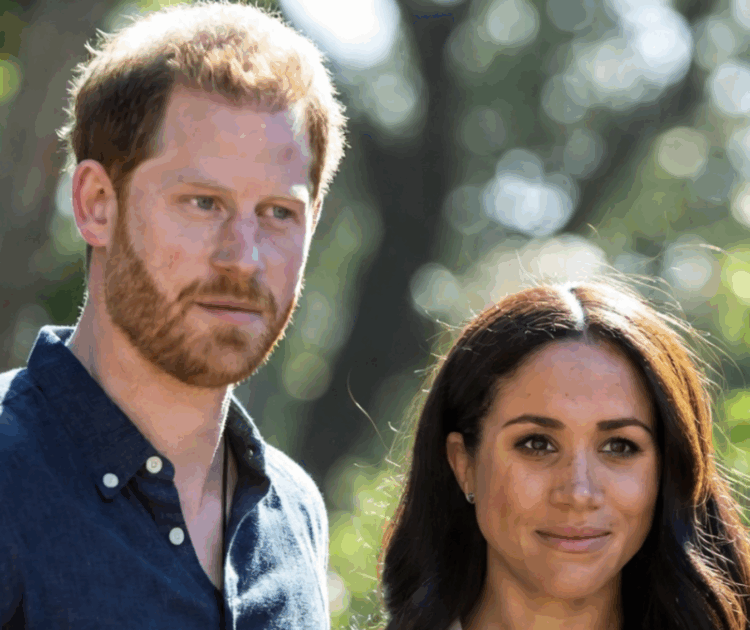

Recent reports have ignited a firestorm of speculation, suggesting that Prince Harry and Meghan Markle, the Duke and Duchess of Sussex, might face an unprecedented ban from the United Kingdom. This extraordinary claim stems from their recent attendance at a high-profile celebrity birthday celebration, sending shockwaves through royal circles and public opinion alike. The idea that a social engagement could trigger such a severe consequence for members of the Royal Family, even non-working ones, has prompted intense debate and scrutiny regarding their status and future ties to Britain.
The Unfolding Controversy: A Star-Studded Gathering Ignites Debate
The genesis of this controversial narrative traces back to the Duke and Duchess of Sussex’s appearance at Kris Jenner’s lavish 70th birthday party. What might seem like a routine celebrity event has, for Harry and Meghan, become a flashpoint for renewed criticism and calls for their exclusion from the UK. The notion of being ‘guilty by association’ is clearly at play, with certain factions arguing that their choice of social circle and public engagements further distances them from traditional royal expectations and, perhaps, the favour of the British establishment. This incident has reignited the perennial debate surrounding their unique position as royals living an independent life across the Atlantic.
[IMG1]
A source close to the Sussexes reportedly remarked on the couple’s approach to public life, stating, “If Harry and Meghan didn’t want attention, they should have just asked for the side door. But then again — Meghan loves the cameras.” This sentiment encapsulates the ongoing tension between their stated desire for privacy and their frequent appearances in high-visibility social settings, often fueling the very media attention they claim to eschew. For many, this perceived dichotomy continues to be a point of contention and fodder for critical commentary.
Dissecting the ‘Ban’ Narrative: Implications for Royal Protocol and UK Access
The calls for Prince Harry and Meghan Markle to be banned from the UK are not merely whispers; they are becoming increasingly vocal from certain segments of the public and royal commentators. But what would a ‘ban’ truly entail for the Duke and Duchess of Sussex? As members of the Royal Family by birth and marriage, their right to enter and reside in the UK is generally enshrined. However, the nature of their departure from official working royal duties, coupled with ongoing controversies, has created an ambiguous legal and social landscape. While a formal, legally binding ‘ban’ on a British citizen or a spouse of a British citizen from their own country is complex and rare, the public pressure and the Royal Family’s perceived distancing could create a de facto exclusion, making any future visits politically charged and potentially unwelcome.
Their infrequent visits to the UK since relocating to California have often been met with mixed reactions, focusing on their security arrangements, their interactions (or lack thereof) with senior royals, and the purpose of their trips. This latest controversy only exacerbates the delicate balance they attempt to strike between their American life and their enduring British roots, particularly as their children, Prince Archie and Princess Lilibet, hold titles and are in the line of succession.
Voices from Both Sides: Royalist Critiques and Public Sentiment
The unfolding saga has unsurprisingly elicited strong reactions from both staunch royalists and the broader public, manifesting in a flurry of comments and social media discourse. Many royal traditionalists express dismay at what they perceive as a continuous disregard for royal decorum, arguing that attending such a party is yet another example of the Sussexes prioritizing celebrity culture over their royal heritage. The criticism often zeroes in on their perceived lack of understanding of the sensitivities surrounding their royal status, even post-Megxit.
[IMG2]
However, an equally vocal contingent has rushed to the defence of Harry and Meghan, viewing the ‘ban’ suggestions as disproportionate and potentially a diversionary tactic. Some critics of the monarchy have pointed out what they see as hypocrisy, with one commenter noting, “The royal family is really trying to distract from the fact that they protected a pedophile for decades (and probably would have continued to if they could have gotten away with it).” This scathing observation, alluding to the Prince Andrew scandal, suggests that the intense scrutiny on Harry and Meghan serves to deflect attention from more serious internal issues within the monarchy itself, creating a convenient scapegoat for public frustrations.
Another perspective articulated by a supporter was, “I mean- even now they’re not exactly throwing him out onto the streets,” highlighting the perceived double standard in how different members of the Royal Family are treated by both the institution and the media. This sentiment underscores a growing disillusionment with how the Royal Family addresses various controversies, with some feeling that Harry and Meghan are unfairly targeted.
Under the Relentless Microscope: Harry and Meghan’s Enduring Public Image Battle
For Prince Harry and Meghan Markle, every action, no matter how seemingly trivial, appears to be placed under an intense, unforgiving microscope. This constant examination transforms even a private birthday celebration into a subject of international debate and potential diplomatic fallout. One insightful critic articulated this phenomenon, writing, “This is too funny. It’s like just Harry’s and Meghan’s existence must be put under a microscope and every thing they do, no matter how small or insignificance, has to be shown to be bad, in bad taste, or simply of such low class that the pearls must be clutched.” This perspective highlights the seemingly inescapable nature of the scrutiny, where every decision is dissected and often framed negatively.
Conversely, many supporters view this incessant criticism as a testament to the Sussexes’ resilience and determination to forge their own path. As another comment passionately stated, “No matter what they do, it’s going to be made into bad press! It’s all intentional and Harry and Meghan know this but are so over it! Good for them living their best lives!” This view posits that the couple is well aware of the media’s agenda and are choosing to prioritize their personal happiness and well-being over attempting to appease their detractors. Indeed, for many, the very idea of a ban from the UK feels somewhat moot, with comments like, “I don’t see Harry and Meghan beating the doors down to go back to the uk anyway, but go off,” suggesting that the UK might not be a priority for the couple regardless of any external pressures.
Silence from the Sussex Camp: A Deliberate Strategy?
Amidst the swirling reports and heated debates, both Prince Harry and Meghan Markle have maintained a characteristic silence on the matter of a potential UK ban. This lack of official comment is not uncharacteristic for the couple, who have largely adopted a strategy of non-engagement with tabloid rumours and speculative reports. Their silence can be interpreted in several ways: perhaps they deem the reports unworthy of a response, or it could be a deliberate tactic to avoid fanning the flames of controversy further. It is highly probable that, at this stage, any comment from their team would only serve to amplify the narrative, rather than diminish it.
Their steadfast refusal to address such dramatic headlines suggests a strategic detachment from the daily churn of royal gossip, preferring to let the stories run their course without their direct input. This approach, while frustrating for those seeking clarity, has become a hallmark of their post-royal communication strategy.
Navigating the Future: UK Ties and Global Stature in Flux
The suggestion of a UK ban for Prince Harry and Meghan Markle, irrespective of its legal feasibility, carries significant symbolic weight. It underscores the profound and ongoing shift in their relationship with the British monarchy and their former home. This particular controversy, sparked by a mere birthday party attendance, exemplifies the extraordinary scrutiny and often hostile environment they face. It highlights a wider tension between the desire for independence and the indelible mark of royal lineage. The continuous public and media debate around their actions, their allegiances, and their very right to visit the UK reflects a monarchy grappling with modernity and a public divided on the roles and responsibilities of its extended family members.
Ultimately, this episode forces a deeper reflection on what constitutes ‘royal’ behaviour in the 21st century and whether former working royals can ever truly escape the expectations and criticisms that come with their titles. The outcome of these discussions, and the Sussexes’ continued choices, will undoubtedly shape their enduring legacy and influence their future standing both in the UK and on the global stage.